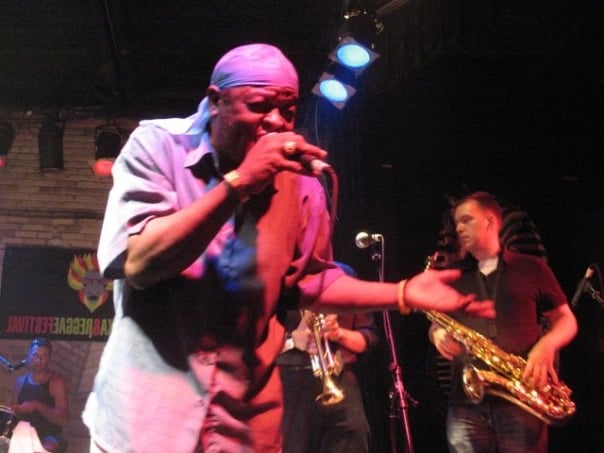
As Steel Pulse reaches 50 years, cofounder David Hinds looks back at the Windrush roots, racial resistance and hard-earned choices behind one of Britain’s defining reggae bands.
Steel Pulse reaches its 50-year milestone in 2025, carrying a history that began in Birmingham rather than Kingston. For David Hinds, the band’s story is tied to the Windrush generation, the Jamaican families who helped reshape postwar Britain while facing open racism and political hostility. That tension became part of the group’s musical language from the start. Steel Pulse did not separate roots reggae from the realities around them; their songs grew from migration, identity and the need to stand firm in a country that often treated Black British life as a problem to be contained.
Hinds’s parents were part of that wider migration story. His father arrived in Britain in the late 1940s, while his mother followed in 1955. Growing up Jamaican and British in Birmingham gave Hinds an early awareness of the distance between those identities, as well as the colonial history linking them. He has described his first seven years as particularly important to the worldview that later shaped his writing. The city’s racial tensions, community life and cultural exchange all fed into Steel Pulse’s understanding of reggae as both inheritance and testimony.
The band’s early work developed alongside Britain’s anti-racist movement. Steel Pulse became associated with Rock Against Racism and shared stages with punk acts including The Clash and The Stranglers, artists who were also pushing back against the far right. That setting gave the group a wider audience without softening its message. Their music could move through punk rooms and reggae spaces because the argument was direct: racism was not an abstract issue, and resistance belonged in the street, the dance and the record shop.

A major break came in 1978, when producer Chris Blackwell signed Steel Pulse to Island Records. The deal led to a run of influential albums and placed British reggae firmly in the international conversation. Their debut, Handsworth Revolution, carried the confrontation of “Ku Klux Klan,” a song aimed squarely at racial terror and oppression. Opening for Bob Marley in Europe pushed the band further into view, and Marley reportedly counted Steel Pulse among his favourite groups. That recognition helped confirm that a Birmingham band could carry roots reggae to a global audience.
The group’s rise also brought difficult compromises. During the 1980s and 1990s, Steel Pulse moved toward more mainstream sounds, a period Hinds and his bandmates later viewed with regret. Even so, the band’s reach extended beyond conventional reggae spaces, including a contribution to Spike Lee’s Do the Right Thing soundtrack and a performance at Bill Clinton’s 1993 inauguration. Those moments sit alongside the harder-edged work rather than replacing it, showing a band navigating visibility, industry pressure and the question of how much of its political identity could survive wider acceptance.
In later years, Steel Pulse returned more forcefully to its roots-conscious footing. Albums such as African Holocaust, released in 2004, and Mass Manipulation, released in 2019, addressed police brutality, environmental damage and human trafficking through the band’s established language of protest. Hinds frames the wider journey around endurance, invoking Burning Spear’s “I and I survive.” At 50, Steel Pulse’s legacy is not simply longevity. It is the refusal to treat survival as surrender, and the continuing belief that reggae can document injustice while keeping cultural pride alive.