The Steel Pulse frontman reflects on reggae’s responsibility to confront racism, homophobia and religious hypocrisy. He also explains how travel and experience have softened the strict edges of his Rastafarian outlook.
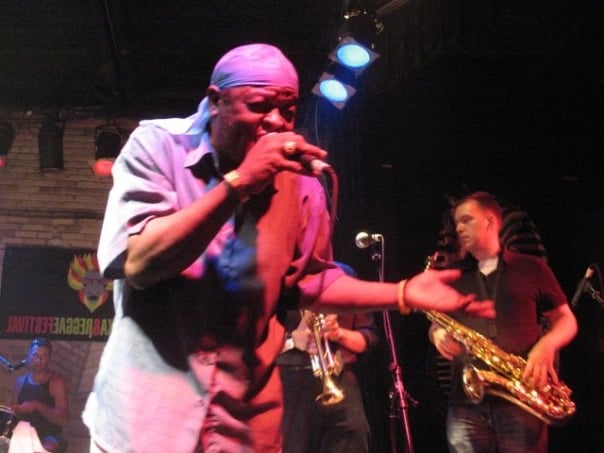
David Hinds has never treated reggae as background music. In a recent interview, the Steel Pulse frontman spoke about the risks that come with addressing racism, homophobia and other subjects that can divide audiences or put an artist in danger. He said the work demands balance: speak too plainly and fans may turn away, stay silent and the music loses part of its purpose. For Hinds, reggae’s tradition of resistance still matters, but telling the truth in the present requires a willingness to enter arguments that many performers would rather avoid.
His criticism extends to organized religion, particularly the gap between public preaching and private conduct. Hinds questioned the sight of religious leaders living in luxury while members of their congregations struggle. He connected that concern to what he witnessed during a visit to Ghana, where he felt religion could be used to exploit people rather than offer genuine spiritual support. The point is not a rejection of belief itself. Instead, his argument targets institutions that turn faith into status, money and authority while leaving the people they claim to serve carrying the burden.
Hinds also described a change in his relationship with Rastafarianism. He once approached its practices in a more rigid way, including strict rules around diet and conduct. Travel broadened that view, exposing him to people living under circumstances far removed from the assumptions behind those rules. He pointed to communities where people eat insects out of necessity, a reality that challenged his earlier understanding of what should or should not be considered acceptable. That experience led him toward a faith shaped more by context and compassion than by fixed formulas.

The same tension appears in his comments on Jamaica’s dancehall culture and its long-running struggle with homophobia. Hinds traced some anti-gay attitudes to religious teaching, including the familiar “Adam and Eve” argument used against homosexuality. He acknowledged that challenging those beliefs can bring serious backlash, especially in Jamaica, where public dissent on the subject remains dangerous. Still, he argued that avoiding the conversation does not resolve it. Dialogue may be uncomfortable, but a music rooted in the experience of oppressed people cannot pretend every form of oppression is someone else’s problem.
That position places Hinds inside a larger debate about what reggae should be in a changing world. Positivity has its place, but he does not believe the genre can remain honest by sanding away every difficult edge. His reflections suggest that reggae’s strength lies not only in its protest history, but also in its ability to examine its own contradictions. For Hinds, evolving does not mean abandoning Rastafarian belief or reggae’s foundations. It means questioning inherited ideas, making room for lived experience and continuing to speak when silence would be easier.
1 Yard chat
OneLoveVoice
Hinds keep it real—reggae fi uplift, fi challenge, fi inspire!