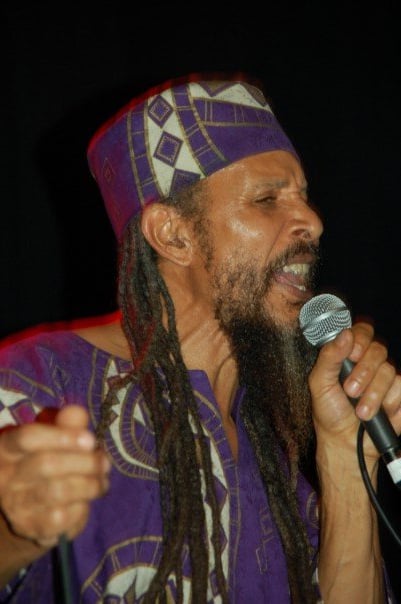
The legendary poet and musician shares insights into his early influences, his collaboration with Dennis Bovell, and how sound system culture shaped his revolutionary art form.

Linton Kwesi Johnson, the pioneer of dub poetry, remains a towering figure in reggae and spoken word. Now 71, Johnson’s work has consistently chronicled the Black British experience, confronting racism and social injustice with lyrical precision. His 1978 debut album, *Dread Beat an’ Blood*, marked the arrival of a groundbreaking fusion of poetry and reggae music, crafted alongside producer Dennis Bovell. This album set the stage for a style that would influence generations, blending sharp social commentary with dub-infused rhythms.
Johnson’s roots are deeply embedded in the sound system culture of London’s Brixton area, where he grew up after emigrating from Jamaica in 1963. According to Linton Kwesi Johnson Reflects on His Roots and D, he credits these sound systems—like the one operated by U-Roy and others—for shaping his understanding of music as a powerful tool for resistance and identity. For Johnson, these spaces weren’t just entertainment—they were vital for nurturing a sense of Caribbean pride amid a hostile environment that often marginalized black youth.

Despite his admiration for legendary DJs, Johnson never tried to emulate their toastings. “I don’t think I was quick-witted enough,” he admits, preferring to channel his energy into writing and recitation. According to the original report, his collaboration with Dennis Bovell, a renowned musician and producer, was born out of mutual respect. Johnson recalls meeting Bovell through the London reggae scene and being struck by his musical instinct. Bovell’s ability to craft music that perfectly matched Johnson’s poetic voice became a cornerstone of dub poetry’s distinctive sound.
Johnson’s process involved presenting Bovell with his poems, which Bovell then set to music. According to coverage of the story, their partnership created a new language—lyrical, political, and deeply rooted in the social realities of Black Britain. The success of albums like *Forces of Victory* and *Bass Culture* demonstrated that reggae could be a vessel for profound social critique, resonating both in the UK and back home in Jamaica.